The let serve, and other small rewrites
Dead time used to be built into the rulebook. A run of small amendments, across about a decade, quietly removed most of it.

The net was once a wall
For most of volleyball's history, a serve that grazed the net was dead on contact — a fault, and the serving team lost the rally. The logic was conservative: keep the trajectory clean and the play readable. The practical effect was a category of serve that ended the moment it clipped the tape, robbing both teams of any chance to contest the ball.
The FIVB ↗ changed that in 2000, one year after the more famous shift to rally point scoring. The amendment was simple: a served ball touching the net and continuing over is live. The receiving team must play it. Officials call it the "let serve," borrowing a term from tennis that already named the thing — though in volleyball, unlike tennis, there is no replay. The serve counts in full, and the rally continues.
The immediate consequence was a change in how receive teams had to position themselves. A let serve tends to drop short and fast, with unpredictable spin, making it one of the more difficult balls to pass cleanly. Receivers who had previously been able to relax fractionally when a serve clipped the net suddenly could not. The change added real pressure with no extra complexity in the rules — a clean trade.
Other small rewrites, same logic
The let serve rule belongs to a cluster of amendments, most introduced or refined between 1998 and 2009, that share the same philosophy: reduce the number of ways a rally can die before it genuinely needs to. Several of them are invisible to a spectator who doesn't know to look.
The block touch rule was clarified during this period. A ball contacted by a blocker does not count as that team's first of three allowed contacts — the team may still use all three after the block. This rule had existed in principle but was regularised in the revised FIVB rulebook, making clear that a touch on the block is functionally outside the three-contact count. The effect on play is significant: a team digs a ball coming off its own block without burning a contact, keeping rallies alive that would otherwise have to end in a hurried second touch.

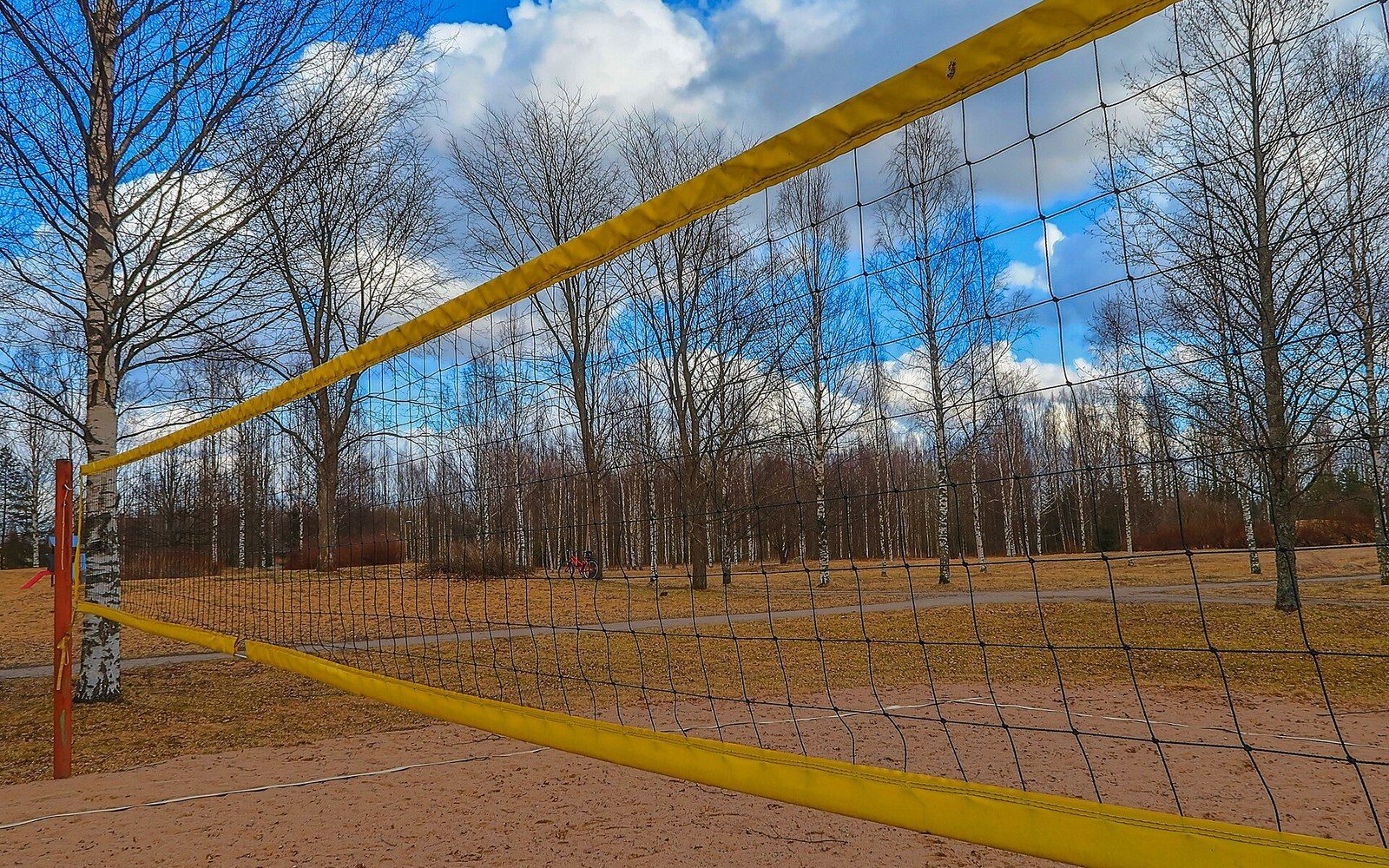
The antenna ruling ↗ — governing what counts as in or out when the ball passes near the vertical rod at the net's edge — was also tightened during this era. More relevant to the spectator is the treatment of the double-contact rule on first ball: a player receiving a hard-driven attack may contact the ball with two body parts simultaneously, or in rapid succession, without it being called a fault, provided the motion is a single action. This is why a libero digging a power shot looks different from a setter delivering an overhand set — both hands may be visible on the ball for a fraction of a second, but only one is considered a technical fault.
None of these changes generated the same public discussion as rally scoring or the introduction of the libero, which arrived in international play in 1998. They were corrections more than reinventions — places where the rules were producing outcomes nobody intended. The let serve in particular was a rule that was never positively chosen; it had just been carried forward from an earlier era when keeping the game tidy mattered more than keeping it moving.
The cumulative effect is a modern game that stops less often for administrative reasons and more often because someone made an error or a brilliant play ended the rally. That distinction matters to a spectator: a dead ball that results from a contested play is satisfying, while one that results from a procedural flaw is not. Volleyball's rulemakers, through a series of unflashy rewrites, have spent twenty-five years moving the game toward the former.
Read next