She may not attack, may not block, may not serve
She may not attack, may not block, may not serve in rotation
The libero is a defensive specialist in a different shirt, exempt from rotation and barred from attacking — a role invented to keep rallies alive.
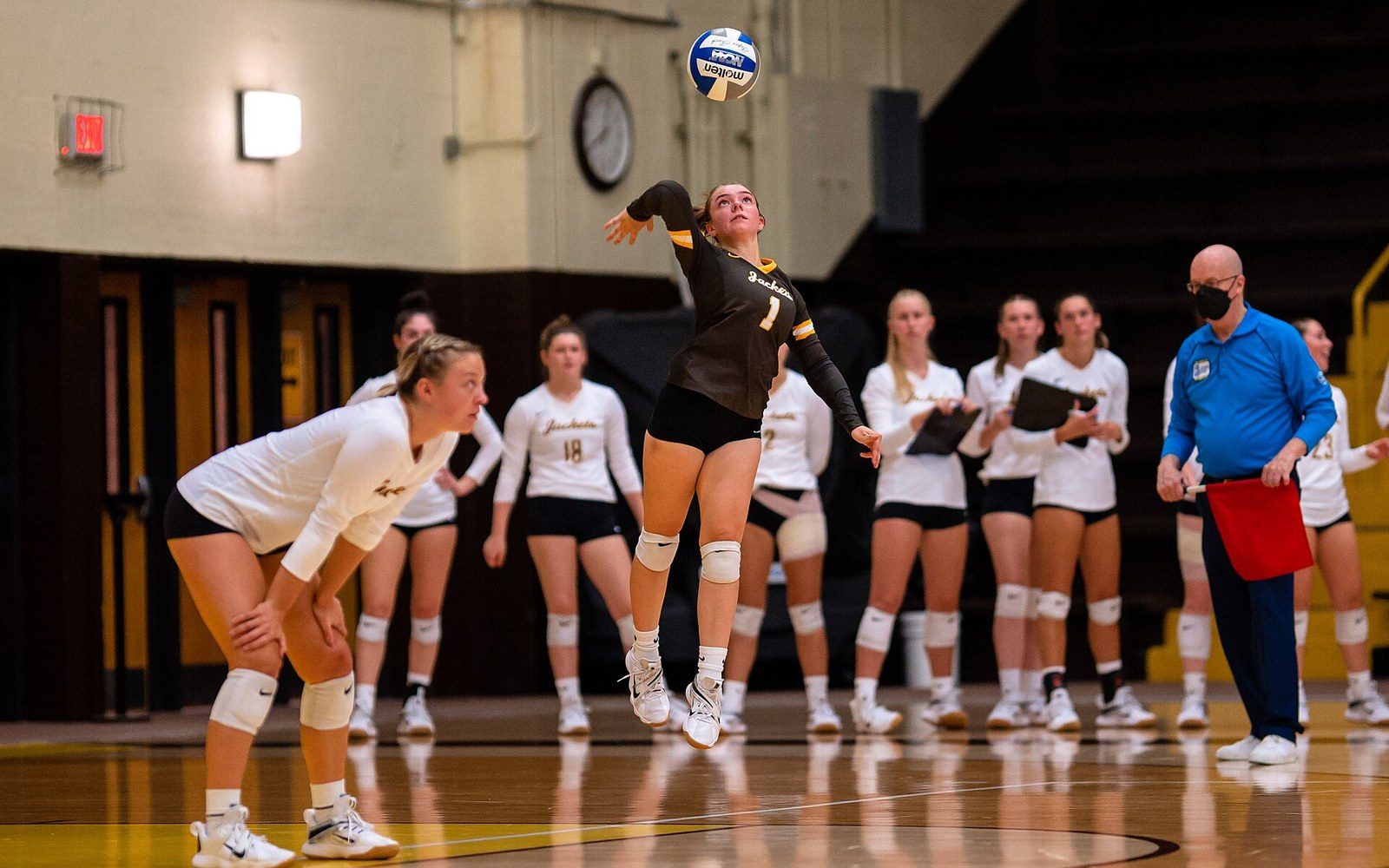
A problem the game made for itself
By the late 1990s, indoor volleyball had a pace problem. The jump serve had arrived, and a well-struck float or topspin from the service line was ending rallies before they properly started. The game's most spectacular skill — the extended, multi-contact exchange that fans actually wanted to watch — was being strangled at first contact. Coaches responded by specialising: they buried their best passers deep in rotations, subbing them in the moment a weak receiver rotated to the back row, then subbing them out again before that player would have been asked to attack. The substitution rules of the time allowed a limited number of those swaps per set, and coaches were burning through them on one job.
The FIVB ↗ introduced the libero position in 1998, with the role formally written into the rulebook before the 1999–2000 playing season. The word is Italian for "free," and the job is essentially the reverse of freedom: a player defined entirely by what they cannot do.
What the rules take away
The libero cannot rotate into the front row. They cannot complete an attack hit from anywhere on the court if, at the moment of contact, the ball is entirely above the height of the top of the net. They cannot serve — at least, not as a matter of course; a rule adjustment that followed later does permit a libero to serve in one specific rotation position, though not every team or competition uses that option. They cannot set with an overhead finger action from inside or in front of the three-metre attack line if a teammate then attacks the ball above net height. They cannot block, and they cannot attempt to block.
What they can do — freely, repeatedly, and without counting against the team's substitution quota — is replace any back-row player between rallies. The libero steps on and off the court without a formal substitution request. The only restriction is that they must wait for a complete rally before re-entering, and they cannot replace the same player they replaced in the previous exchange unless the teams have changed sides. The distinctive contrasting shirt, which has to be registered with the referee before the match, is the mechanism that makes this unlimited movement legible in real time: officials can track the libero's position against the rulebook without stopping play to check a lineup card.
That shirt also carries its own implications. The libero cannot become a temporary captain. If the starting libero is injured and cannot continue, a team may designate a second libero for the remainder of the match — but they cannot switch back. The position, for all its tactical flexibility, is firmly bounded.
What the position actually produces
The practical effect was immediate and significant. Because the libero exists explicitly to receive serve and dig attacks, and because their movement off the bench is essentially free, coaches could now put their finest defensive player on the floor for every single back-row rotation of the set without spending a substitution. The quality of first contact across the highest levels of the game rose sharply. Longer rallies followed.
The position also changed the economics of the roster. A team previously had to weigh whether a great passer who couldn't attack was worth a spot — six substitutions per set imposed a real cost on that calculation. The libero slot removed the cost. The result was a new kind of specialist career: players who might have been marginal inclusions on a competitive roster could now build entire professional lives around passing and digging. The clubs of Italy's SuperLega, Poland ↗'s PlusLiga, and Turkey's Efeler Ligi now carry liberos who are among the highest-paid specialists on their teams, recruited for what is, by the position's own definition, a purely defensive skillset.
The NCAA adopted the libero for college volleyball in the United States, and the position has been standard at that level ever since. The scale of American college volleyball means the libero rule shapes development pathways: young players are identified for the role early, and programs recruit specifically for it.
The fine print that produces the interesting moments
Several of the libero's restrictions generate the most-discussed calls in any broadcast. The setting restriction — overhead finger action inside or in front of the attack line, followed by a teammate attacking above net height — catches viewers off guard because it looks, to an untrained eye, like an ordinary set. The rule exists because allowing the libero to function as a setter from that position would give the team an effectively unlimited front-row setter, bypassing the reason the rotation system constrains setter placement in the first place.
The attack restriction is equally precise. A libero can hit a ball that is below net height from anywhere, but cannot complete an attack hit on a ball that is above net height from anywhere on the court, including from behind the three-metre line. The setting restriction, by contrast, applies only inside or in front of that line — the area designed to restrict back-row players generally. In this way the libero is a back-row player who never becomes a front-row player, permanently, by definition.
The libero steps on and off the court without a formal substitution request.

Because the libero's entries and exits happen during the dead ball between rallies, a sharp-eyed viewer will notice the player slipping on and off the court in what looks like barely a pause. There is no stoppage. The referee notes the change, the libero takes the place of whichever back-row player is being replaced, and the next serve goes. What looks like a smooth feature of the game's rhythm is in fact a carefully regulated positional mechanism — one more rule that shapes everything you see without ever quite announcing itself.
Read next