She may not attack, may not block, may not serve
What a defensive specialist costs you
The libero is the best passer on your roster — and the one player who can never put the ball away.

One jersey, one trade-off
Every team has twelve players on its roster and six on the court. When one of those six wears the contrasting shirt of the libero, that position is locked into a specific function: receive, dig, set from behind the attack line. No jumping the net to block, no attacking above the top of the net, no serving in normal rotation. The libero exists purely to keep the ball alive.
That restriction is not accidental. The FIVB designed the role in 1998 — introduced into international competition for the 1998 World Championships — precisely to guarantee that defensive excellence did not require offensive threat. A team gets a specialist who can cycle in and out for any back-row player without burning a substitution, and in exchange that player contributes zero scoring potential.
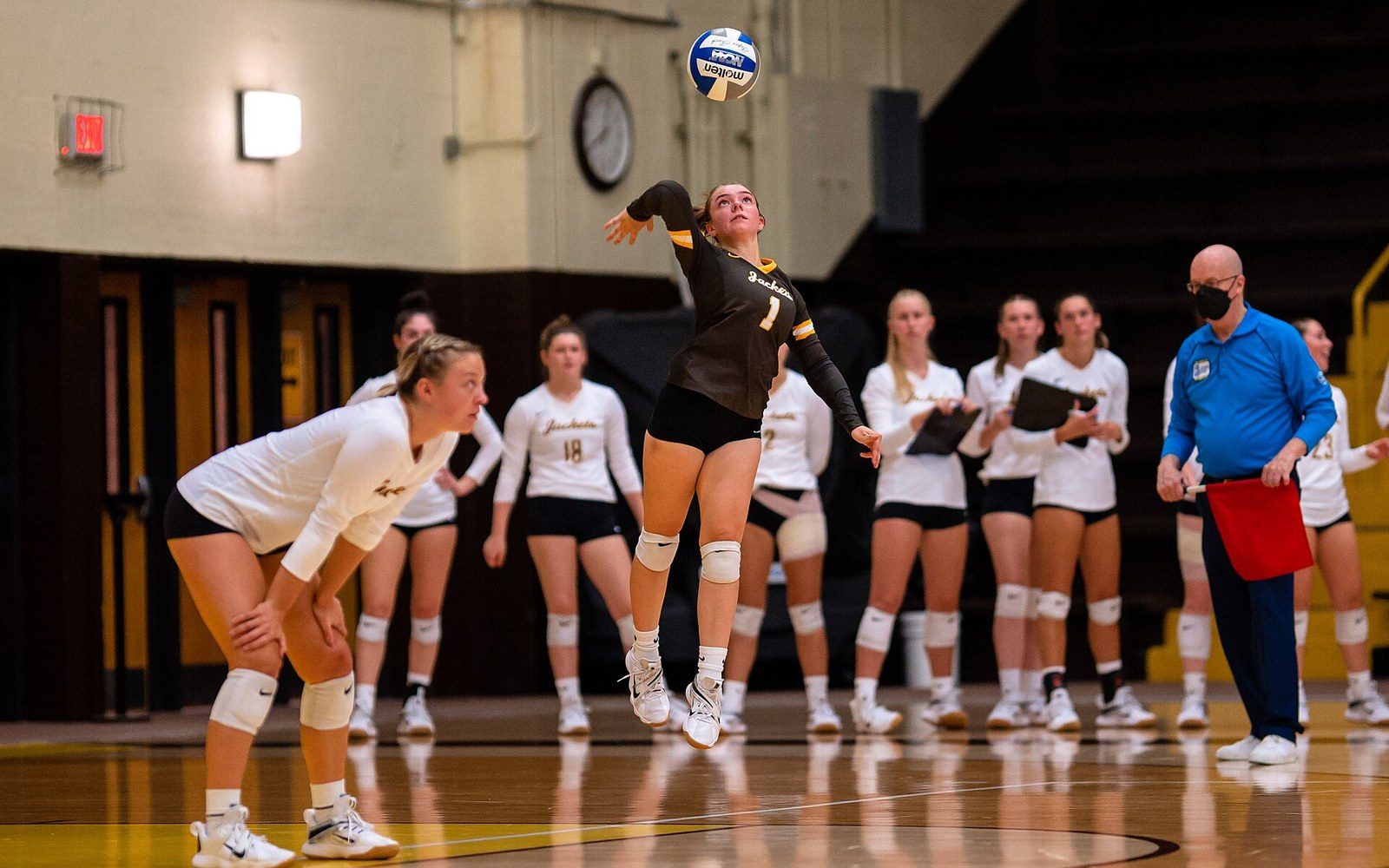
The cost is easier to see under rally point scoring. Before 1999, a side out — winning the rally without your own serve — simply reset possession. Under rally point, every rally has a winner who scores. A libero who digs a ball perfectly, enabling a kill, contributes nothing to the number that just changed on the scoreboard. The point went to the attacker. The libero's value lives entirely in the rallies that would otherwise end early.

That is why some systems run without one. A six-rotation system built on three tall, mobile all-rounders may decide that the passing reps spread across several players are worth more than concentrating them in a specialist who then disappears offensively. The calculation tips the other way in the big leagues — which is why the libero has become nearly universal in Italy's SuperLega, Poland ↗'s PlusLiga, and Turkey ↗'s Efeler Ligi, where rosters are deep enough to absorb the offensive vacancy and where elite serves, particularly the jump serve, arrive with enough pace to overwhelm non-specialist receivers.
The NCAA runs the same arithmetic in a narrower talent pool. A squad where your best passer is also a capable attacker faces a genuine choice: does putting her in the libero jersey help more than it costs? Division I programs regularly answer both ways, and both answers are defensible.
The jersey does not lie. It signals a deliberate choice: this team has decided that keeping a ball off the floor is worth more, right now, than the possibility of a swing. Whether that trade pays out is settled one dig at a time.
Read next