The best players are not where you think
The Nations League, and the summer the world sees
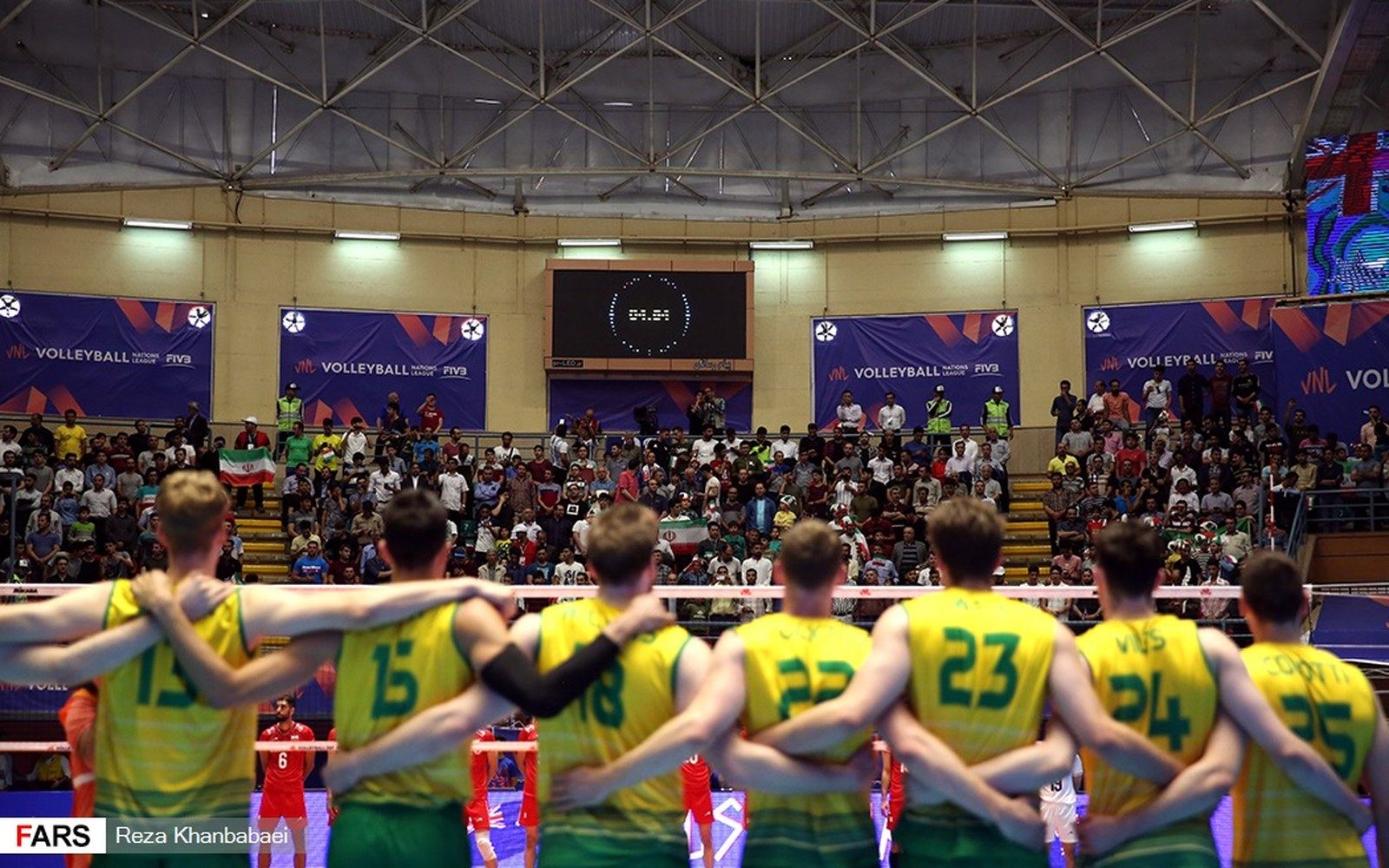
The FIVB's flagship summer competition is barely a decade old, was built with broadcast in mind, and is now the stage most casual viewers think of first when they picture elite volleyball.
What the VNL replaced, and why that matters
Before 2018, the FIVB ran the World League for men and the World Grand Prix for women. Both had existed since the early 1990s and followed roughly the same logic: national teams travelled in groups across a long intercontinental pool stage, collecting points toward a final weekend. They worked, in the sense that they identified strong teams and rewarded the sport's powerhouses — Brazil, Italy, Russia, the United States — with regular international exposure. What they did not do particularly well was make a single, coherent television event. Scheduling was diffuse, the branding was inconsistent between the men's and women's competitions, and the commercial architecture around them was ageing.
The FIVB replaced both competitions with the Volleyball Nations League — VNL — beginning in 2018, running men's and women's editions simultaneously under the same name, the same graphic identity, and, crucially, the same rights package. The FIVB is the sport's global governing body, and the VNL represented its most deliberate effort to create a property that a broadcaster or sponsor could treat the way they treat a Champions League season: a recurring, predictable, high-production event with a fixed calendar slot.
How the competition actually works
The structure is cleaner than either of its predecessors. Sixteen national teams qualify for each edition, split between a core group of twelve permanent participants and four challengers who earn their places through a separate qualifying pathway. The permanent spots have historically gone to the nations that generate the largest audiences and the most commercial interest — the United States, Brazil, Italy, Poland ↗, Turkey, China, Japan, and others — which is worth understanding clearly: the VNL is not a pure sporting meritocracy at the entry level. It is a league designed partly around existing markets.
In the preliminary phase, all sixteen teams play a round-robin pool stage across several weeks, with matches hosted at rotating venues in different countries. A team might play one weekend in Ankara and the next in Bangkok; the hosts change, but the competition runs continuously. The top eight from the standings advance to a Finals week, held at a single venue, where the bracket resolves to a champion through knockout matches.
Rally point scoring governs every set: a point is awarded on every rally regardless of which team served, every set runs to 25 points (the fifth to 15), and a two-point margin is always required to close. This means matches have a predictable outer boundary in time, which is exactly what a commercial broadcast window needs. The old side-out system — where a team could only score when it served — produced matches of radically variable length, a scheduling nightmare for live television.
The game the VNL puts on display
The Nations League has become the venue where the tactical and physical state of the international game is most visibly on show, precisely because the best players in the world — those spending their club seasons in Italy, Poland, and Turkey — return to their national programs in May and June and are visible on a single platform.
What viewers actually see in a VNL match is modern volleyball at its most developed. The jump serve is now a front-line weapon for almost every competitive national team; the top men's servers routinely generate ball speeds and float trajectories that make first-contact passing the most consequential skill on the court. The libero — the defensive specialist in the contrasting shirt who cannot attack or block — has become one of the most important figures in this context, absorbing the punishment that elite serving inflicts and keeping a team's offensive system functional. Because the libero is exempt from rotation restrictions, they can occupy the back row continuously, which is why the position exists at all: it is a formal rule solution to the problem of maintaining reception quality against high-velocity serving.
Rotation itself is visible to an attentive viewer through the lineup card, and the consequences of the five-one system — one setter who rotates through all six positions, meaning the ratio of front-row attackers changes with every rotation cycle — become readable once you know what to look for. When a team's setter is in the front row, there are only two dedicated attackers alongside them in the front row; when the setter drops to the back, three are available. Teams engineer serve-receive patterns and set priorities around exactly this cycle, and the VNL's long preliminary stage means those tendencies become documented over multiple matches.
The commercial logic and what it means for the audience
The VNL is explicit, in a way its predecessors were not, about being a broadcast product. The FIVB's commercial partnership structure around the competition means the final is always held in a venue with production infrastructure suited to global streaming distribution. Crowd sizes at preliminary-round host venues vary enormously — some weekends fill large arenas, others are played in front of modest attendances — but the camera-facing presentation is consistent throughout. For a viewer encountering the sport for the first time, the production values resemble those of any major team-sport property.
That consistency comes with a trade-off that is worth naming. The permanent-participant structure insulates the largest markets from relegation, which means the VNL does not fully tell you which sixteen national programs are currently the world's best — it tells you which sixteen are the most commercially significant, with four rotating spots for the rest. The World Championship, which the FIVB also runs on a four-year cycle and which does operate on open qualification, is technically the more meritocratic tournament. But the World Championship is every four years. The VNL is every summer, and it is what most viewers actually watch.
The result is that the Nations League functions as the face of international volleyball — the entry point for new audiences, the stage where individual players become recognizable across borders, and the competition that sets the tempo of the international game's calendar ↗. Whether that face is perfectly accurate is a different question. It is, without doubt, the most watched version of the sport, and understanding its structure is the first step to understanding what you are actually seeing.
Read next