The best players are not where you think
The NCAA, three divisions and a stadium record
American college volleyball fills arenas that club leagues in Italy and Poland ↗ rarely match — and it runs on a ruleset that quietly differs from the one the FIVB uses everywhere else.
How the structure works
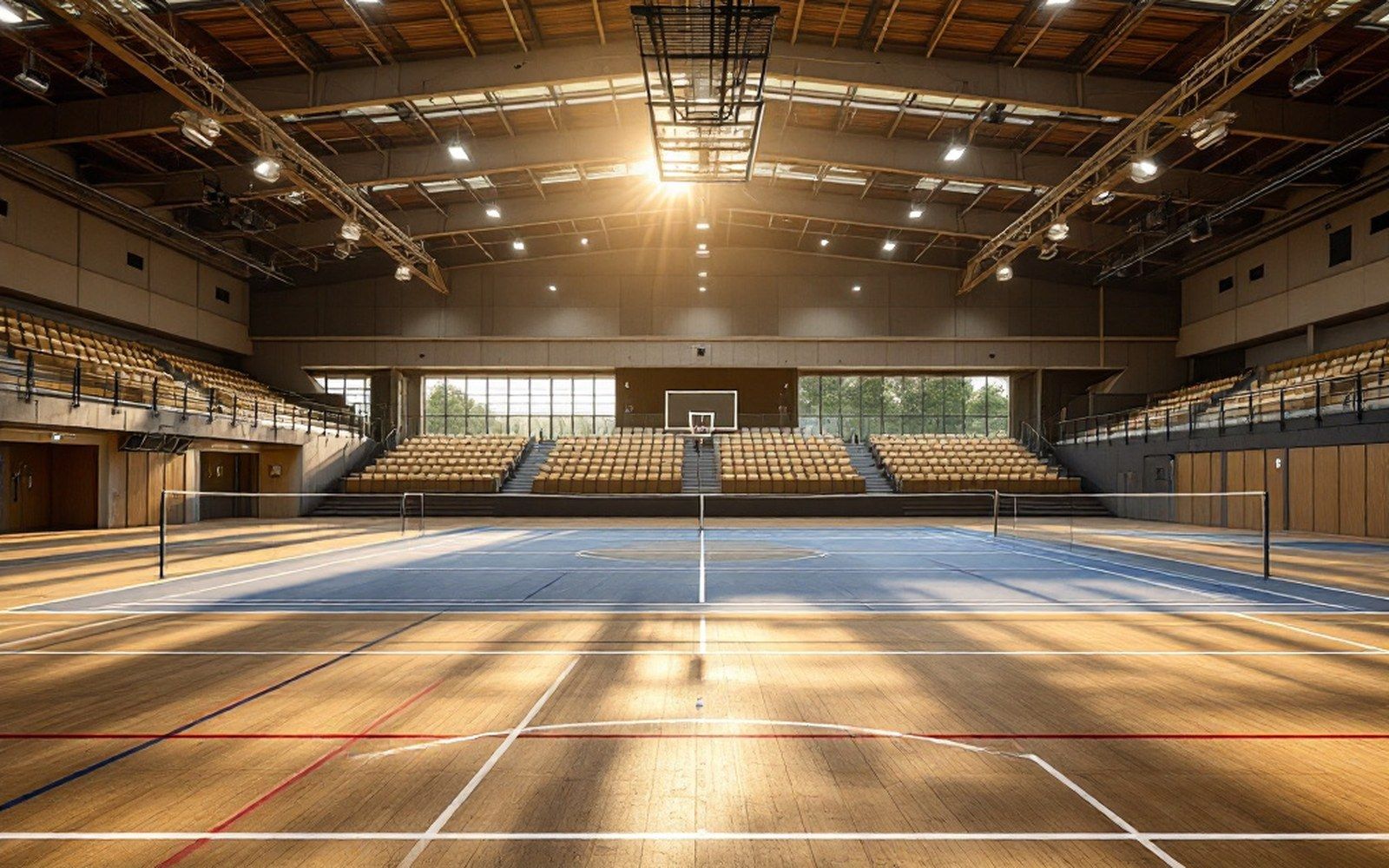
The National Collegiate Athletic Association divides its member schools into three divisions, and volleyball sits in all of them. Division I is the tier most people think of when they think of college sports: the biggest universities, the largest athletic budgets, the scholarship programmes that recruit internationally. Division II and Division III exist below it, with Division III operating without athletic scholarships entirely — participation is the point. Across all three divisions, women's volleyball is one of the most widely offered sports in the NCAA catalogue, which is part of why the American college game has a scale that surprises people who arrive from the international side of the sport.
The NCAA's own championship records show the women's Division I tournament as the flagship event, a 64-team bracket held each December that ends with a final four at a rotating host site. The field is seeded, conferences earn automatic bids, and the remaining places go to at-large selections by committee. It is a format borrowed wholesale from basketball, and it creates the same kind of bracket drama: a top seed eliminated early, a mid-major programme advancing further than anyone predicted. The men's Division I tournament runs on the same model but with a much smaller field, reflecting the fact that men's college volleyball is concentrated in a handful of conferences, most of them on the West Coast or in the Midwest.
What Division I women's volleyball produces, at its largest programmes, is genuine arena sport. Nebraska, Penn State, Stanford, Texas, Wisconsin, Louisville — these are programmes that regularly sell out on-campus facilities seating several thousand, and Nebraska in particular has built something that functions more like a professional sporting culture than a college extracurricular. The Cornhuskers have led Division I attendance for years, playing home matches in front of crowds that exceed most top-flight club matches in Italy, Poland and Turkey, the three European leagues where the international game is at its most concentrated.
The attendance record, and what it means
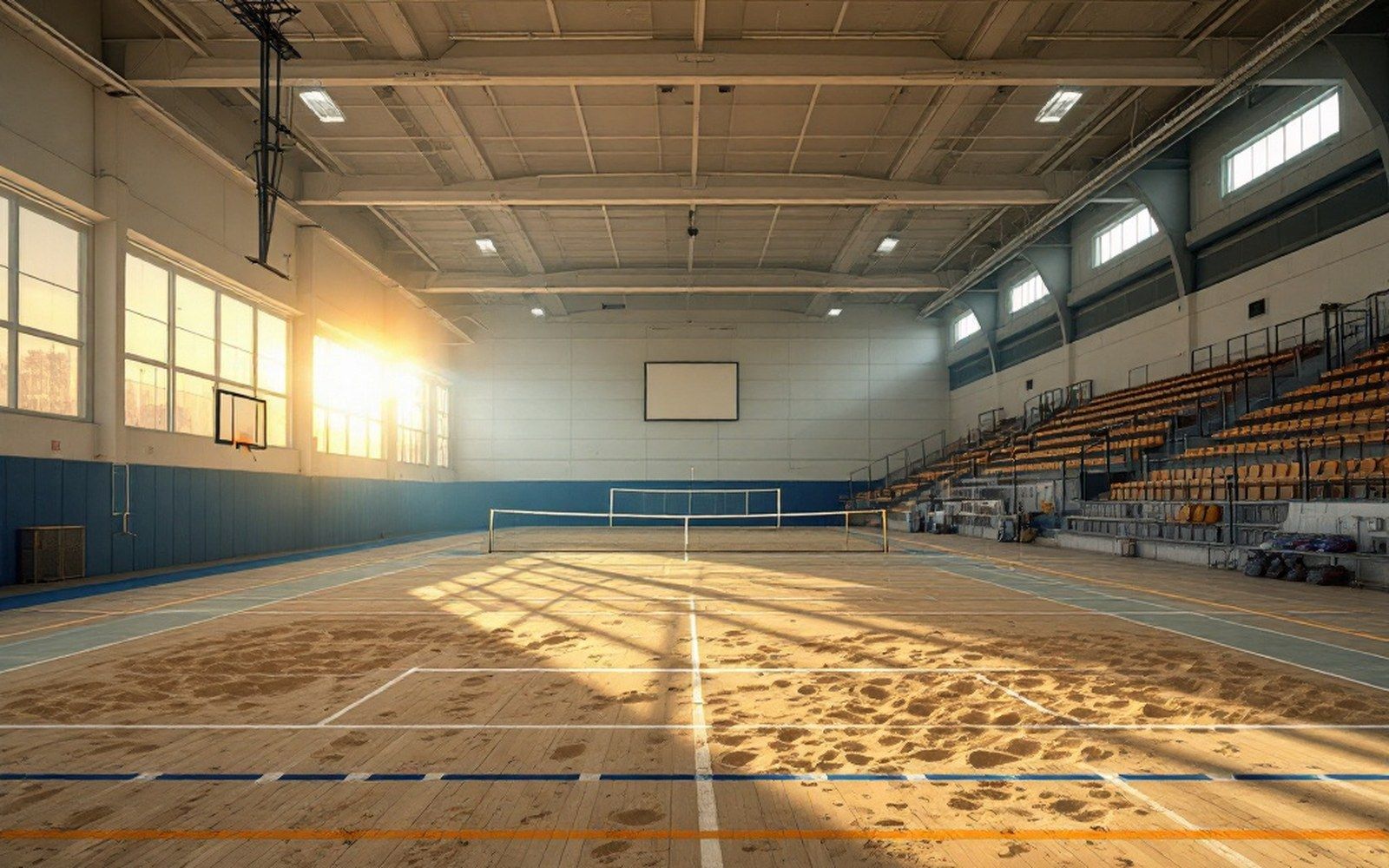
On August 30, 2023, Nebraska hosted an outdoor match against Omaha at Memorial Stadium — a football ground — and drew 92,003 spectators, a figure that broke the previous world attendance record for a volleyball match. Nebraska had already drawn exceptional crowds to the sport before that night, but nothing on this scale. These are not normal match conditions: the setting is unusual, the surface is adapted, and the occasion is as much event as sport. But the numbers are real, and they tell you something genuine about the place volleyball holds in parts of American collegiate culture.
The record draws a smile from anyone who has watched the Italian Serie A1 or the Polish PlusLiga in a half-full club hall, and it would be wrong to treat it as a straightforward comparison — those clubs play roughly thirty matches a season in facilities built for something else or never built large. But it is also wrong to dismiss it. The fact that a university can put nearly a hundred thousand people in seats to watch a volleyball match, regardless of the theatrical staging, reflects a depth of engagement that the international game outside Brazil rarely generates at the amateur and semi-professional level.
Where the rules diverge
American college volleyball uses the same core framework as the FIVB — rally point scoring, six players, three contacts, the libero — but several rules diverge in ways a viewer switching between the two games will notice.
The most significant is the net antenna. In FIVB play, a ball contacting the antenna is immediately out. NCAA rules have historically been stricter at certain points about what constitutes a legal crossing, and the antenna judgements occasionally differ. More visibly, the NCAA was for some time out of step on the let serve: the rule that a serve clipping the net and continuing into the opponent's court is live. The FIVB adopted this first, and the NCAA followed, but the timelines of minor rule harmonisations between the two bodies have not always been synchronised. Coaches who move from the NCAA to international programmes — or players signed from college by professional clubs in Europe — consistently report that rule adaptation is part of the adjustment.
The libero rules also carry small differences. In FIVB rules, the libero may set the ball overhand when standing behind the attack line, and a front-row player may then attack that set, but the libero may not set overhand while on or in front of the attack line. The NCAA has applied variations on this restriction at different points in its rule history, and the detail matters to anyone trying to understand why a play that looks legal in one game is flagged in another.
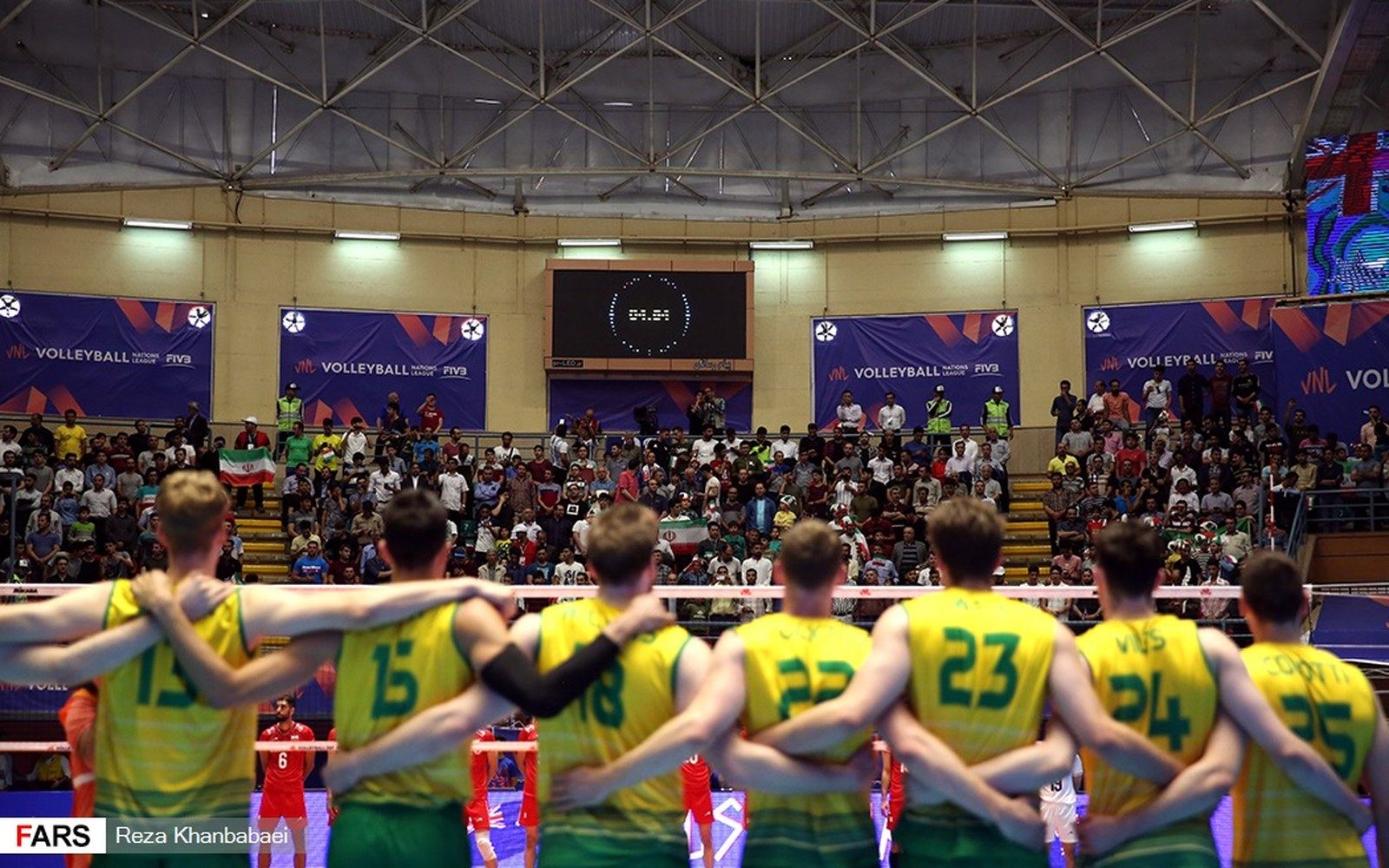
Substitution limits diverge more sharply. FIVB rules cap substitutions at six per set. NCAA play has operated with different totals and, because the libero replacement is tracked separately and does not count against the substitution limit in the same way, the effective number of personnel changes across a match can look quite different to someone accustomed to watching a Nations League match.
What the college game produces for the professional leagues
The practical output of Division I volleyball, from the perspective of the international game, is a pipeline of trained players entering the European professional leagues. Because American universities can offer scholarships, they recruit globally, which means a top Division I programme might carry players from Brazil, the Dominican Republic, Italy, or Serbia alongside American players. Those players graduate into a professional market where Italy's Serie A1, Poland's PlusLiga, and Turkey's Sultanlar Ligi are the primary destinations for anyone seeking full-time professional volleyball. The college game, in that sense, is simultaneously a domestic competition and a de facto development circuit for the world game.
Brazil operates its own development path through domestic club structures and does not rely on the NCAA pipeline in the same way. But for players from countries without strong domestic leagues, an American university scholarship followed by a European professional contract has become a well-established route, and Division I programmes are judged partly on how many of their alumni reach those leagues.
The NCAA tournament, then, is not simply an American curiosity. It is the culmination of a system that trains a meaningful share of the players who will end up in the leagues the international audience actually follows. Watching the December bracket with that context in mind changes what the matches represent: they are partly about which programme wins the championship, and partly about which players announce themselves to the professional world loudly enough to be noticed on the other side of the Atlantic or in South America. The stadium record is the headline. The pipeline is the substance.
Read next